Food and Mood: How What You Eat Shapes How You Feel

Certain foods can improve your mood and mental health.
More Than Just Fuel: Why Food Matters to Your Mind
Most of us are well aware of the connections between food and our physical health. But there is also a surprisingly powerful connection between what’s on your plate and what’s on your mind.
When most of us think about taking care of our mental health, we picture therapy, exercise, or maybe getting better sleep. But food? That one often falls off the radar. Yet, our brains are incredibly busy organs, burning through energy and nutrients around the clock. What we eat can impact our mood, energy, focus, and even how well we sleep or manage stress. If you’ve ever found yourself reaching for chocolate when you’re stressed or skipping breakfast and feeling a bit off all morning, you’re certainly not alone.
Enter the growing field of nutritional psychiatry, where researchers are connecting the dots between diet patterns and mental health concerns like depression and anxiety. There’s no magic snack that will banish bad days, but nutrition is increasingly recognized as a valuable piece of the puzzle.
How Does Food Affect Mood?
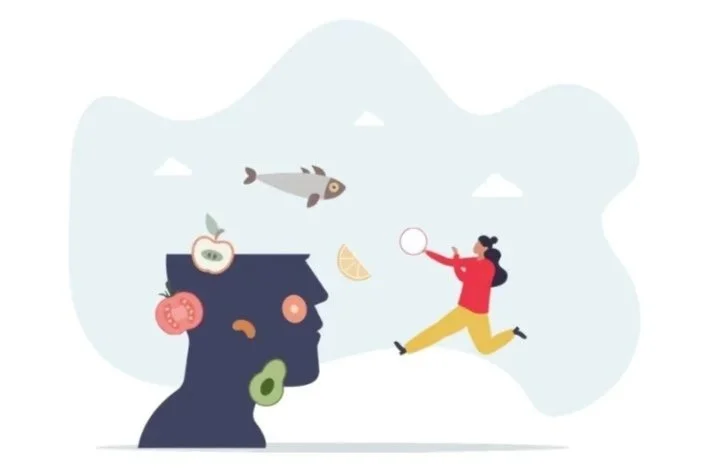
Brain nutrition: Your brain needs a steady supply of protein, healthy fats, vitamins, and minerals to send messages and keep you feeling your best.
The gut-brain connection: An entire ecosystem of microbes lives in your gut, and they “talk” to your brain in ways scientists are just beginning to understand. While the research is promising, there’s no one-size-fits-all gut-health protocol just yet. Eating a varied, fiber-rich diet (think veggies, fruit, whole grains, legumes) is a sensible step.
Inflammation & mental health: Diet can influence inflammation, but the science here is complex. Instead of chasing miracle anti-inflammatory foods, focus on overall balance.
Blood sugar swings: Skipping meals or relying on sugary snacks can leave you tired, cranky, or foggy-headed. Balanced meals with fiber, protein, and healthy fats help keep your energy and mood more stable.
Processed Foods, Alcohol, and Caffeine: Finding Your Balance
Research links high intakes of ultra-processed foods with higher rates of depression and anxiety. This doesn’t necessarily mean that those foods cause mental health issues, but there certainly is a strong correlation between them. Often, that relationship is complex, shaped by health, stress, sleep, and life circumstances.
Instead of a strict ban of these foods, ask yourself: Are processed foods crowding out nutrient-dense options? If the answer is yes, then perhaps it is time to make room for more “Whole Foods”.
You should also examine your intake of caffeine and alcohol as they too can impact sleep, anxiety, and mood for some people.
Start Where You Are
If changing your diet feels overwhelming, forget about creating the perfect meal plan. Instead of trying to eliminate all of your “bad” options, start by simply adding a healthy option first.
Try one of these:
Add blueberries to breakfast.
Throw spinach into your eggs.
Add chickpeas to a salad.
Keep walnuts or pumpkin seeds around for a snack.
Swap white bread for whole-grain bread occasionally.
Have salmon for dinner once a week.
Add another vegetable to something you're already cooking.
Have yogurt and berries instead of trying to invent an elaborate "gut-health protocol."
These aren't dramatic changes. That's precisely the point. Keep it simple!
After a short time you will likely see and feel the benefits of these additions. And hopefully that encourages you to incorporate a few more healthy options and begin eliminating the unhealthy ones.
Mediteranean Diet
What to Eat More Of
Some nutritious options to help you build healthy meals and snacks that support your overall wellbeing include:
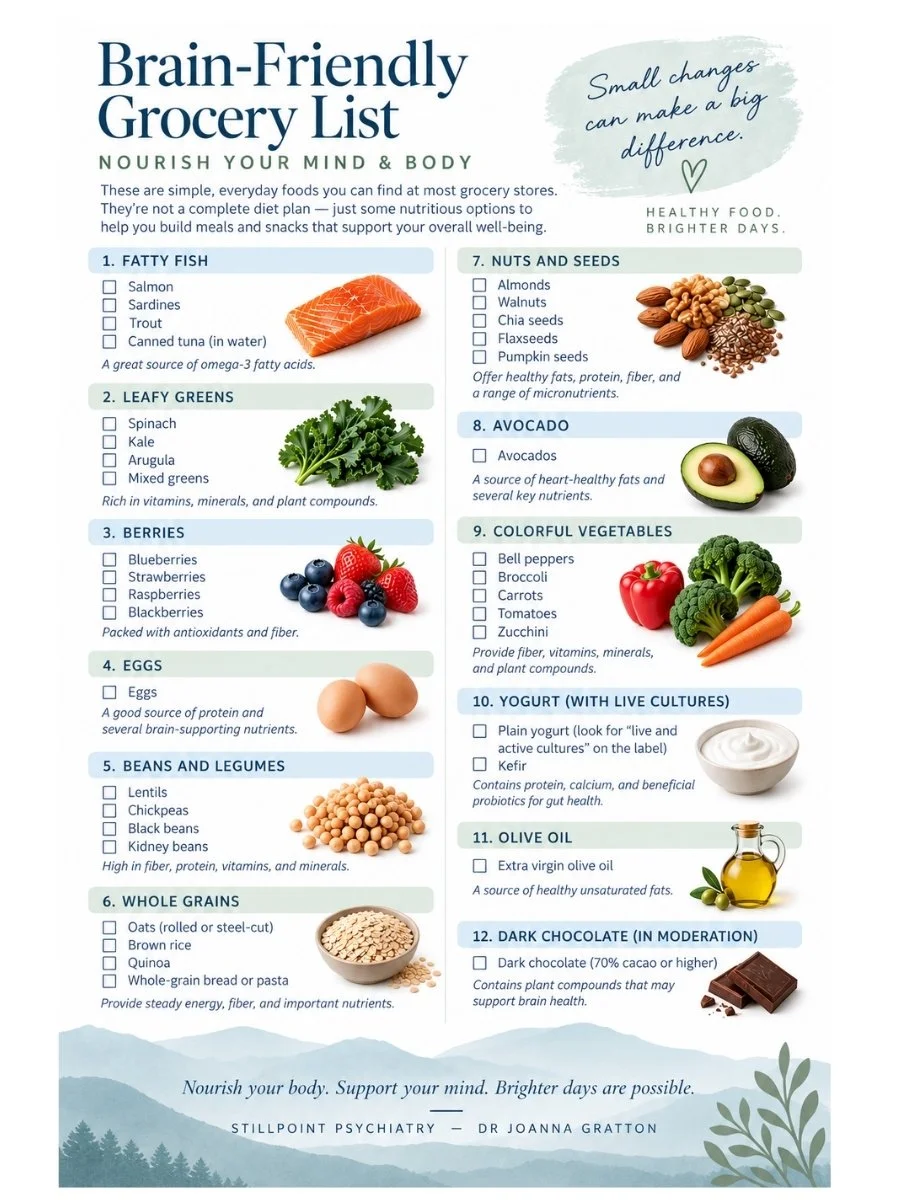
Fatty fish (salmon, sardines, trout) for omega-3s
Leafy greens and colorful veggies (spinach, kale, peppers, carrots, tomatoes)
Berries and fruits for vitamins and fiber
Beans and legumes (chickpeas, lentils, black beans)
Nuts and seeds (walnuts, almonds, pumpkin seeds, chia, flaxseed)
Whole grains (oats, brown rice, barley, quinoa)
Fermented foods (yogurt, kefir, kimchi, sauerkraut)
Unsaturated fats from olive oil, avocado, nuts, and fish
Yes, even dark chocolate can have a place!
It’s Not “Superfoods”, It Is the Power of Patterns
It’s tempting to put all our hope in “superfoods” like blueberries, dark chocolate, or salmon. While these can certainly have a place in a healthy diet, the real story is about the big picture—the patterns in what we eat most often.
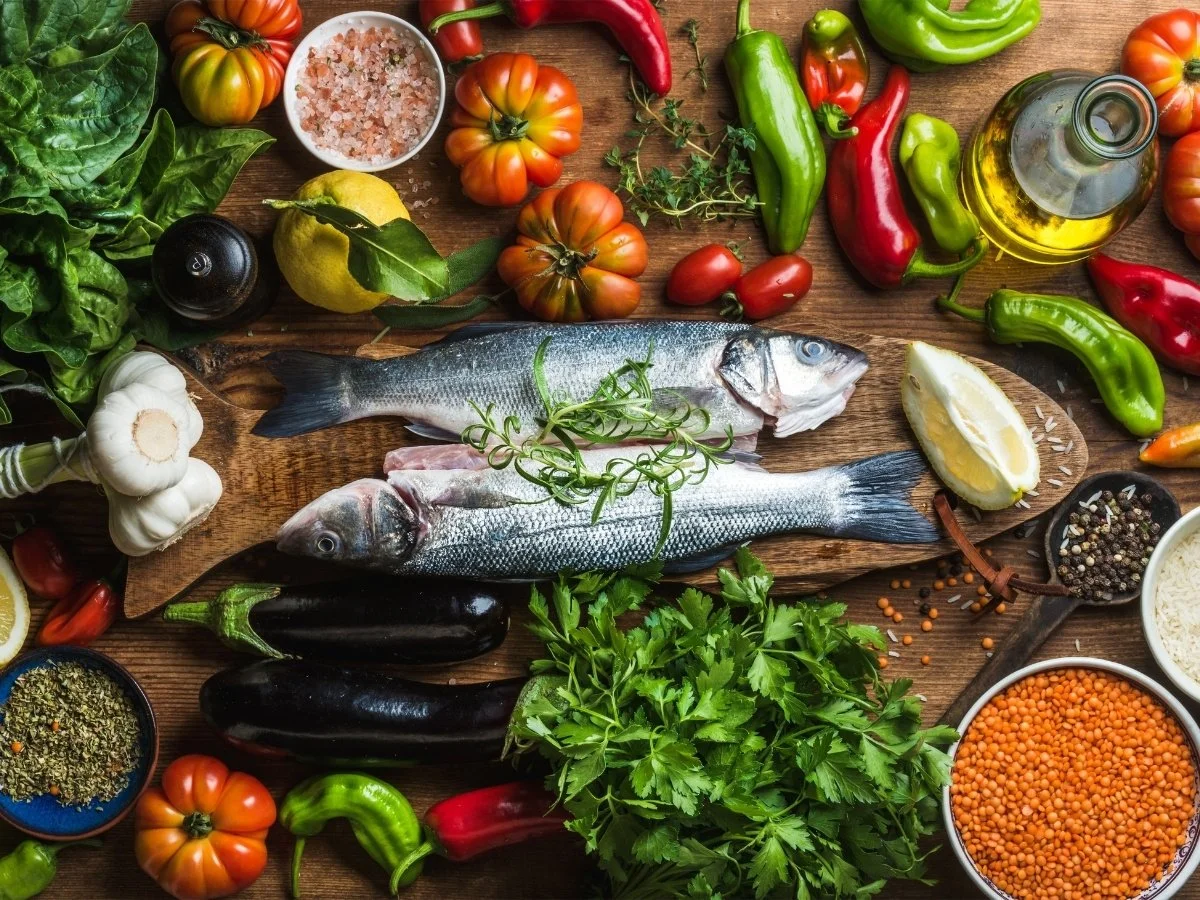
One of the most studied and recommended styles is the Mediterranean diet, which emphasizes:
Plenty of fruits and vegetables
Beans, legumes, and whole grains
Nuts, seeds, and healthy fats (like olive oil)
Fish and seafood
Moderate amounts of dairy, poultry, and eggs
Less highly processed food
Below is a sample brain friendly grocery list.
Don’t Forget About Deficiencies
Sometimes, symptoms like fatigue or trouble concentrating can be tied to specific nutrient deficiencies (think vitamin B12 or iron). So, if you’re struggling with things like this and not sure why, a health professional can help you investigate. Not everyone needs a cabinet full of supplements or endless lab tests! But your doctor will likely know where to begin.
The Takeaway: Food Is Just One Piece
Studies suggest that dietary changes can have a modest, positive effect on symptoms of depression for many people. Still, in more serious cases, nutrition is best seen as a complement to other forms of mental health care; not as a replacement.
Perhaps the most important thing to remember is that nutrition should never become another reason to blame yourself for struggling.
Depression isn't caused by failing to eat enough blueberries. Anxiety isn't the result of having dessert. And someone experiencing a mental health condition shouldn't be told simply to "eat better."
Mental health is influenced by a great many things, including biology, genetics, physical health, sleep, relationships, stress, trauma, environment, medications, substance use, life circumstances, and yes, nutrition.
That's why I believe good psychiatric care should look at the whole person.
With treatment, the question isn't: "Which one of these is the answer?"
It's: "Which combination of things might help this particular person feel and function better?"
Medication may be appropriate. Psychotherapy may be helpful. Sleep may need attention. Exercise, stress, relationships, hormones, medical conditions, and nutritional deficiencies may be one part of the conversation as well.
Fortunately, supporting your mental health through food doesn't require perfection. It may simply mean giving your brain more of what it needs, more often, and paying attention to how you feel along the way.
Looking at the Whole Picture
Mental health rarely comes down to just one thing. At Stillpoint Psychiatry, we take time to understand the whole person, including your symptoms, physical health, sleep, stress, lifestyle, relationships, medications, and other factors that may be affecting how you feel.
If you're looking for thoughtful, unhurried psychiatric care, you're welcome to start by scheduling a complimentary 15-minute phone consultation with us.
Please note that this article is for educational purposes only and isn't intended to replace individualized medical or nutritional advice. If you're experiencing significant changes in mood, anxiety, sleep, appetite, or functioning, talk with a qualified healthcare professional.
References
Firth J, Marx W, Dash S, et al. The Effects of Dietary Improvement on Symptoms of Depression and Anxiety: A Meta-Analysis of Randomized Controlled Trials. Psychosomatic Medicine. 2019;81(3):265–280. doi:10.1097/PSY.0000000000000673.
Jacka FN, O'Neil A, Opie R, et al. A randomised controlled trial of dietary improvement for adults with major depression (the 'SMILES' trial). BMC Medicine. 2017;15:23. doi:10.1186/s12916-017-0791-y.
Abukmail E, Koloth Pradeep N, Ahmed S, Albarqouni L. Moderate- to Long-Term Effect of Dietary Interventions for Depression and Anxiety: A Systematic Review and Meta-analysis. Annals of Internal Medicine. 2025;178(7):987–999. doi:10.7326/ANNALS-24-03016.
Morse MB, Garcia B. Food and Mood: Current Evidence on Mental Health and the Microbiota-Gut-Brain Axis.Current Psychiatry Reports. 2025;27(11):632–641. doi:10.1007/s11920-025-01636-2.
Lane MM, Gamage E, Travica N, et al. Ultra-Processed Food Consumption and Mental Health: A Systematic Review and Meta-Analysis of Observational Studies. Nutrients. 2022;14(13):2568. doi:10.3390/nu14132568.
National Institutes of Health, Office of Dietary Supplements. Vitamin B12: Fact Sheet for Health Professionals and Iron: Fact Sheet for Health Professionals.